
Close
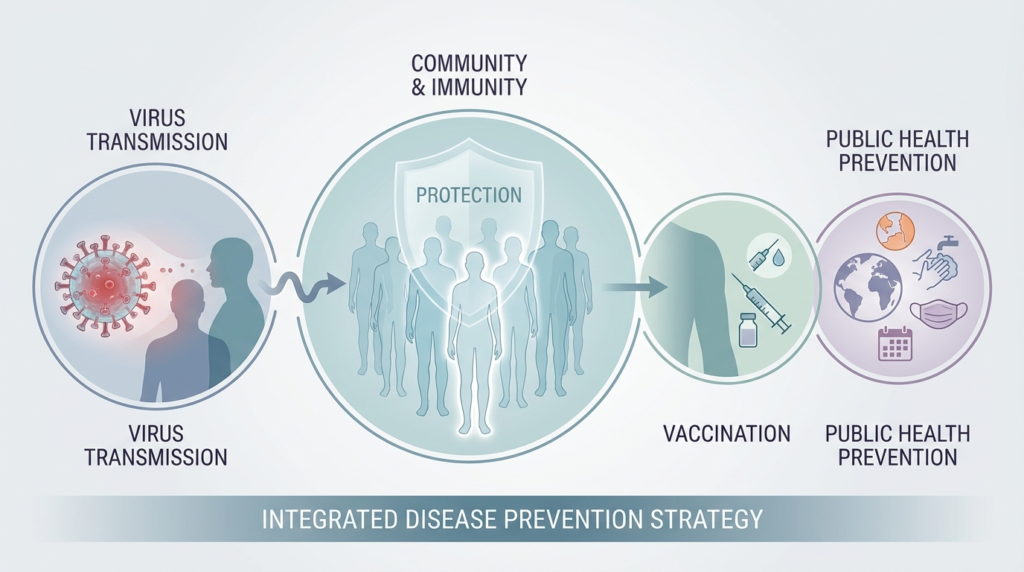
Measles outbreaks in the U.S. have brought renewed attention to how a disease that was once uncommon can return and why vaccination remains an important public health tool.
For many people today, measles may feel like a disease from another era. Decades of vaccination programs and public health efforts dramatically changed how often communities experienced measles outbreaks.
However, recent cases in the United States have brought renewed attention to an important question:
How can a disease that became uncommon return, and what role does vaccination play in preventing outbreaks?
Understanding measles requires looking beyond individual cases. It involves understanding how infectious diseases spread, how vaccines work, and why maintaining protection within communities remains an important part of public health.
Measles is a highly contagious viral infection that can spread quickly among people who are not protected.
The return of measles cases in the United States is influenced by several factors, including:
Vaccination remains one of the main tools used worldwide to reduce measles infections and prevent outbreaks.
Measles is an infectious disease caused by the measles virus.
The virus spreads mainly through respiratory transmission. Because it can spread efficiently between people, measles has historically caused large outbreaks when populations lacked sufficient protection.
Common symptoms include:
Although many people recover from measles, the infection can sometimes lead to complications, particularly among infants, pregnant individuals, and people with weakened immune systems.
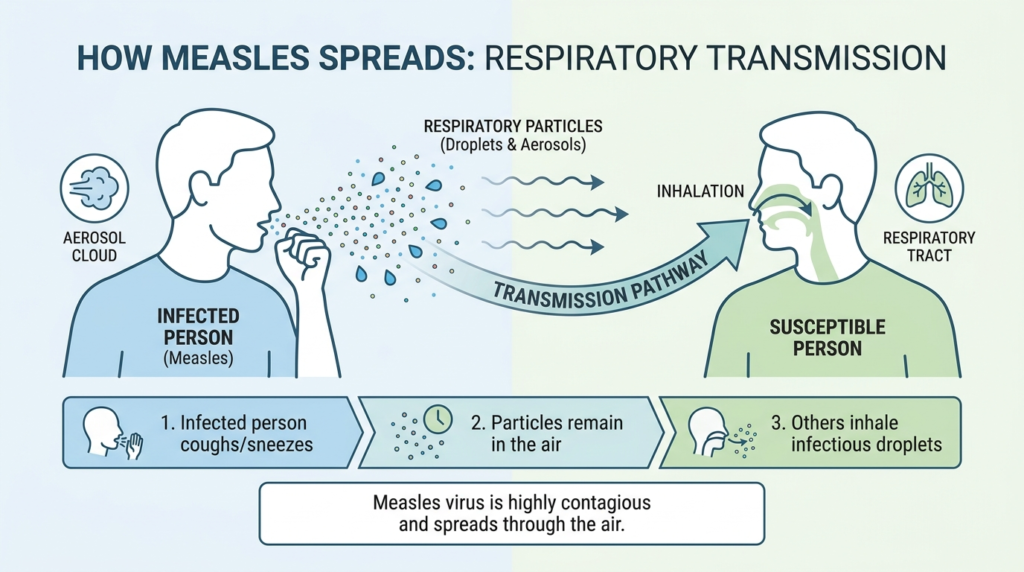
The return of measles cases is not caused by a single factor. Infectious disease patterns are influenced by several conditions working together.
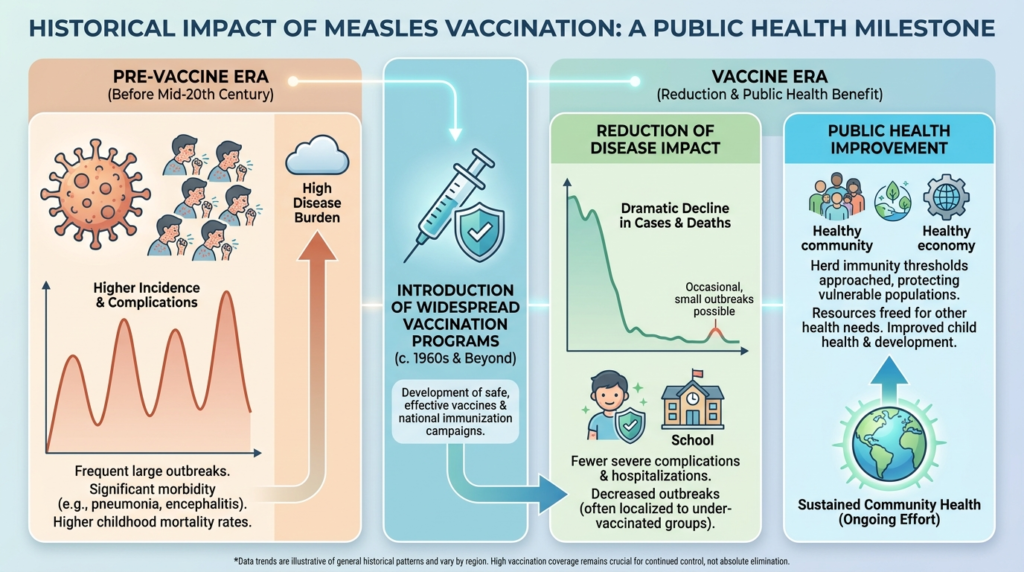
Vaccination programs have significantly reduced measles transmission in many countries.
When protection levels decrease in specific communities, there may be more opportunities for the virus to spread after it is introduced.
This does not mean every community with lower vaccination rates will experience an outbreak, but reduced protection can increase vulnerability when measles reaches susceptible populations.
Measles continues to circulate in some parts of the world.
Because people travel internationally, viruses can move between countries and regions. When measles enters an area where some people are not protected, outbreaks can occur.
Community protection refers to the effect that high levels of immunity can have on reducing disease transmission.
When many people are protected, it becomes more difficult for some infectious diseases to spread widely.
This concept is especially important for diseases like measles because of its high contagiousness.
Before widespread vaccination, measles was a common childhood infection in many countries, including the United States.
The introduction of the measles, mumps, and rubella (MMR) vaccine changed the public health landscape by greatly reducing measles cases.
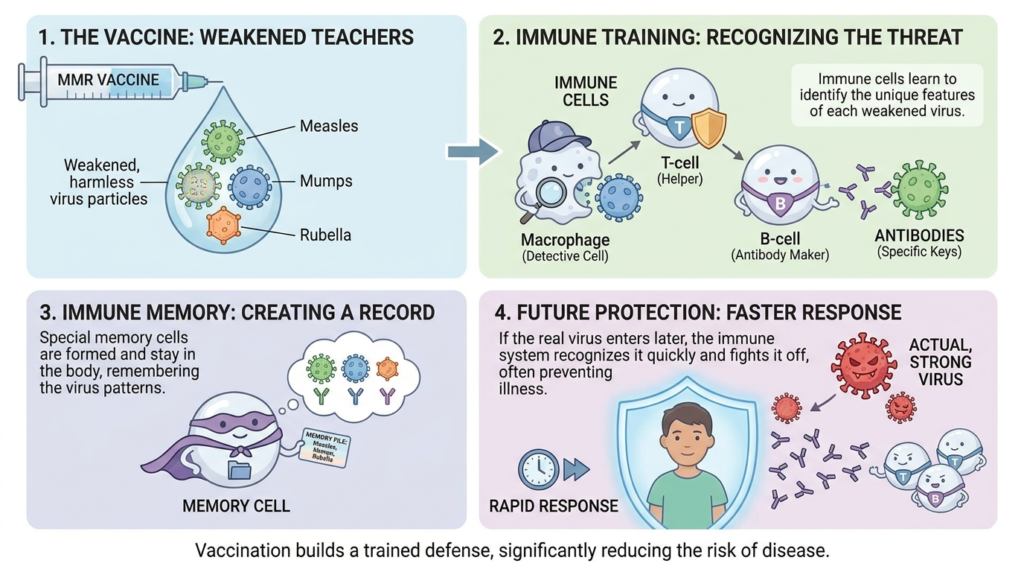
Vaccines work by training the immune system to recognize and respond to specific infections.
For measles prevention, vaccination helps reduce:
The MMR vaccine protects against three viral diseases:
It has been extensively studied and is included in vaccination programs in many countries.
Like all medical interventions, vaccines continue to be monitored for effectiveness and safety through scientific research and public health surveillance.
Symptoms usually develop after an incubation period following infection.
Common symptoms include:
A high fever is often one of the early signs of infection.
These may include:
Some people experience:
A characteristic rash may appear as the illness progresses.
Because symptoms can overlap with other conditions, people with concerns about possible exposure or symptoms should seek guidance from a healthcare professional.
Vaccination has two important roles.
Vaccination helps prepare the immune system to respond to specific infections.
When many people are protected, infectious diseases have fewer opportunities to spread.
Public health strategies often combine vaccination programs, disease monitoring, education, and access to healthcare services.

Scientific evidence has consistently evaluated:
Research and public health recommendations continue to guide decisions about vaccination policies and disease prevention.
An important part of public health communication is ensuring that people have access to accurate information and understand both the benefits and limitations of medical interventions.
Measles cases can increase when the virus is introduced into communities where enough people are not protected, allowing transmission to occur.
The MMR vaccine provides strong protection against measles and has been studied extensively for effectiveness and safety.
No vaccine provides absolute protection for every individual, but vaccination significantly reduces the risk of infection and complications.
Measles spreads efficiently because the virus can transmit through respiratory pathways and infect people who are susceptible.
Parents can discuss vaccination schedules and individual health questions with qualified healthcare professionals who understand their specific circumstances.
People who may have been exposed to measles or who develop symptoms consistent with the infection should contact a healthcare professional for guidance.
A healthcare provider can evaluate individual circumstances and recommend appropriate next steps.