
Learn how the floods in Nepal are affecting hospitals, drinking water, diseases, mental health, and the recovery of communities in the wake of the disaster.
Glacial Collapse in Nepal: Public Health Impacts Following the Floods
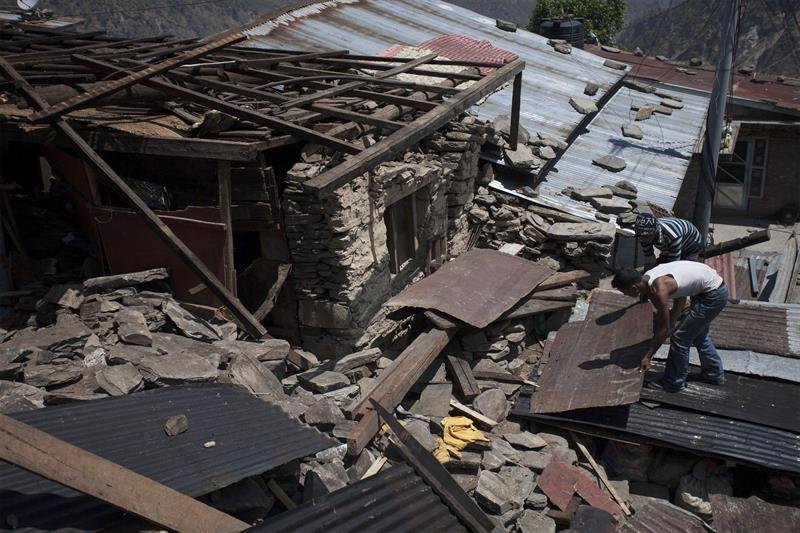
The floods that struck Nepal on August 26, 2026, left hundreds dead, communities cut off, and widespread destruction of roads, bridges, water systems, and health facilities. Two days after the disaster, the emergency was no longer limited to search-and-rescue operations: a complex public health crisis was also beginning.
According to the Nepalese government’s official update at 3:30 p.m. local time on August 28, 538 bodies had been recovered from the river areas. Many people, including local residents and tourists, remained missing, and authorities warned that the figures were still subject to verification as operations continued.
The geographic scope is also significant. The World Health Organization reports that the floods have affected communities in Rasuwa, Nuwakot, Dhading, and Chitwan in Bagmati Province, as well as Gorkha and Tanahun in Gandaki Province. Fifteen municipalities have been declared disaster-affected areas for a period of three months.
For the survivors, however, the number of victims represents only part of the problem. Safe water, medical care, medication, sanitation, food, and psychological support will be crucial in determining the actual health impact in the coming weeks.
What caused the floods in Nepal?
The event has been widely described as a “glacial collapse,” but the scientific investigation is not yet complete.
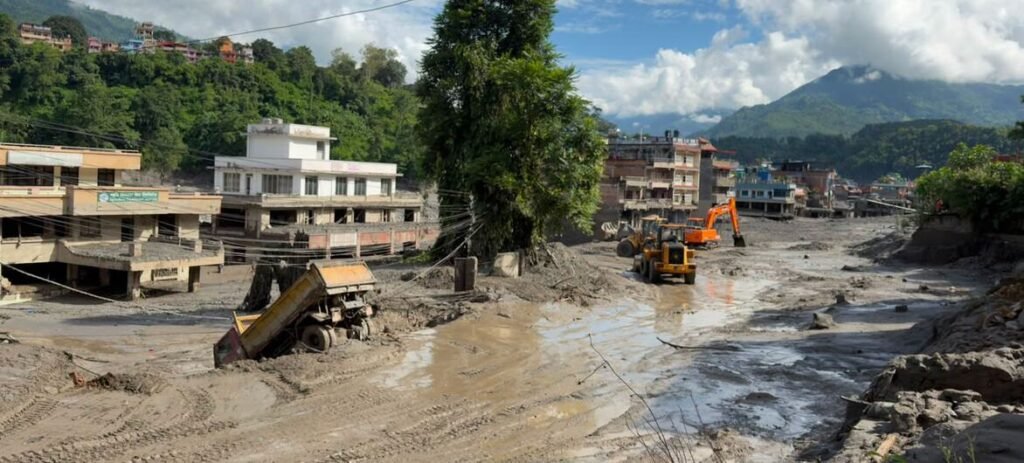
The U.S. Geological Survey (USGS) states that the flooding and debris flow were likely triggered by a rapid slope failure involving a glacier in Langtang National Park, near the border with China. The debris traveled approximately 100 kilometers through the valleys of the Lende Khola and Trishuli Khola rivers, striking populated areas and infrastructure along the way.
The seismic energy released by the initial rupture was equivalent to that of a magnitude 5.2 earthquake. A second event, approximately three hours later, released energy equivalent to a magnitude 4.2 earthquake.
There is, however, one important caveat.
The USGS itself states that it is not yet clear whether the initial rupture was actually a glacial collapse or a landslide that incorporated part of a glacier. The scientific information published so far is preliminary and may be revised as new satellite data and field analyses become available.
A OMS apresenta outra parte do quadro preliminar: a inundação em Rasuwa ocorreu após uma elevação súbita do fluxo no rio Bhote Koshi, possivelmente relacionada a uma avalanche de gelo a montante e ao represamento temporário do rio Lhende. As avaliações continuam.
This means that, at this point, it is more accurate to treat the event as a slope failure involving ice and a glacier, followed by a debris flow and flooding, rather than to propose a definitive geological mechanism.
The healthcare system was also affected
A major flood creates a particularly difficult situation: it suddenly increases the number of people in need of assistance while destroying part of the infrastructure needed to provide that assistance.
According to the WHO, three health clinics were completely destroyed, one hospital sustained partial damage, and access to two other hospitals was cut off. Approximately 10,000 families need immediate assistance.
This completely changes the meaning of a medical emergency.
A person with a fracture, a deep cut, or another injury may be relatively close to a hospital, but a destroyed bridge or a road blocked by debris can turn a few kilometers into hours of travel.
The same problem occurs in the opposite direction.
Medications, blood bags, equipment, medical teams, and ambulances need to reach the affected communities.
Emergency medical teams were dispatched from Kathmandu to the affected districts, while authorities and partner organizations are working to maintain trauma care, first aid, blood supply, and the continuity of essential services.
Drinking water and sanitation are becoming health issues
Once the current subsides, another risk begins to take on greater importance: water quality.
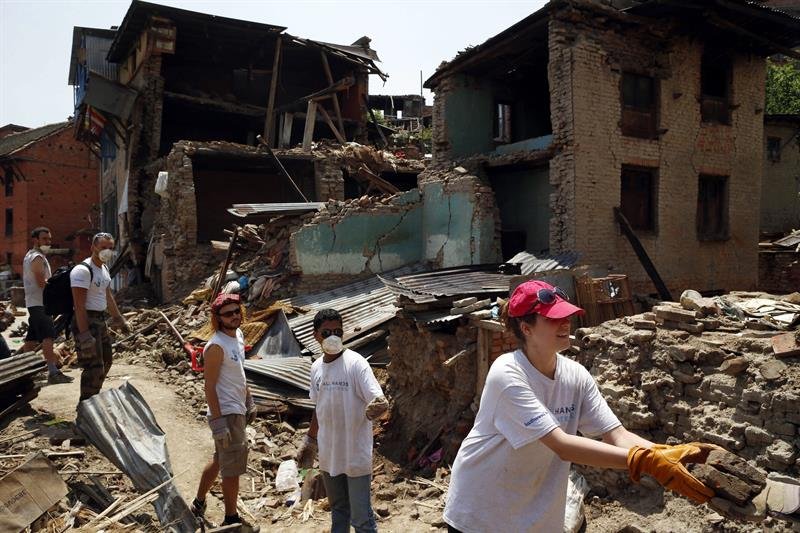
Floods can damage water supply networks, sanitation systems, and structures used to store water. At the same time, displaced families may end up concentrated in temporary shelters with limited sanitation facilities.
The WHO warns that population displacement, overcrowding, damage to water and sanitation systems, and disruptions to health services can increase the risk of communicable diseases, especially diarrheal and respiratory illnesses. Unsafe water and food, vector-borne diseases, and mental health issues are also among the priorities identified.
This needs to be interpreted correctly.
An increased risk does not mean there is a confirmed epidemic.
It is incorrect to say that cholera, dengue, or any other specific disease will inevitably occur simply because there was a flood.
The problem is that certain conditions that contribute to disease can arise simultaneously: contaminated water, poor sanitation, population displacement, and limited access to medical services.
That is why epidemiological surveillance and rapid access to safe water are just as important as treating the injured.
The emergency also affects those who already needed treatment
Not all health problems following a disaster are directly caused by water or debris.
People continue to live with diabetes, high blood pressure, cardiovascular disease, asthma, and other conditions that require medication and ongoing care.
Pregnant women still need medical care.
Babies and children still need care.
A person who has lost their home may also have lost medications, prescriptions, documents, and access to the pharmacy they normally used.
In this scenario, a disruption in care can lead to another health problem.
For this reason, one of the priorities stated by the WHO is to maintain and restore essential services. The organization has mobilized $150,000 from its regional emergency fund and provided an emergency health kit capable of meeting the needs of approximately 10,000 people for three months, as well as multipurpose tents and other supplies.
At least 17,000 children were affected
The consequences are particularly significant for children.
UNICEF estimates that at least 17,000 children have been affected by the floods in Rasuwa, Nuwakot, and Dhading. In its August 27 assessment, the organization also reported that at least four health facilities had been severely damaged.
Children’s vulnerability is not limited to injuries or infectious diseases.
When a family simultaneously loses its housing, access to safe water, income, and access to services, risks related to nutrition, protection, and health can overlap.
UNICEF is expanding the distribution of hygiene kits and preparing medical tents, mosquito nets, newborn care kits, and therapeutic food for children with acute malnutrition. Mental health and psychosocial support teams have also been mobilized.
Education was directly affected.
At least 18 schools were completely destroyed and another 20 were damaged, according to UNICEF. Approximately 10,000 school-age children need support to continue their education.
In an emergency like this, education, health, and child protection are all interconnected.
A school can temporarily serve as a shelter. A prolonged interruption of classes can rob children of an important sense of normalcy. The separation of family members during evacuations also requires systems for identification and reunification.
Mental health is not a secondary concern
Not all of the consequences of the flood are visible in medical exams.
Some families lost their homes and livelihoods in a matter of minutes. Others are still searching for missing relatives.
Fear, anxiety, grief, sleep difficulties, and stress responses may arise after traumatic events of this magnitude.
This does not mean that every person affected will develop a psychological disorder.
Many reactions are expected human responses to an extreme experience.
The challenge for health care services is to identify those who need additional support and ensure that this care does not disappear once the initial rescue phase is over.
UNICEF has already mobilized psychosocial support teams and is working with the government to identify, register, and reunite children who have been separated from their families.
Roads, energy, and communications are also part of public health
Hospitals do not operate in isolation.
They depend on roads, energy, telecommunications, fuel, water, and supply chains.
The floods damaged several of these systems at the same time.
UNICEF reports that roads, bridges, hydroelectric facilities, water systems, and telecommunications networks have been severely damaged, leaving communities isolated and hindering the delivery of humanitarian aid.
This ripple effect explains why it can take much longer for people’s health to recover than for the floodwaters to recede.
A medical facility may remain physically intact and still have difficulty operating if medications do not arrive, the power goes out, or patients are unable to reach the facility.
The disaster continues to be monitored
The situation is still evolving.
In the official update at 3:30 p.m. on August 28, the Government of Nepal reported that 538 bodies had been recovered, while many people remained missing. Of the 632 people from 33 countries listed as affected foreigners, 121 had been located and 511 remained missing at that time. The government itself emphasized that these figures remained subject to verification.
Authorities are also continuing to monitor river systems and the risk of further flooding downstream while search and rescue operations, evacuations, medical assistance, and aid distribution continue.
This means that any article about the disaster must include the date.
Figures released in the morning may be out of date just a few hours later.
What will be the key factor for public health in the coming weeks?
The ultimate impact of the disaster will not be determined solely by the number of people rescued in the first few days.
In the coming weeks, certain factors will be particularly important:
- availability of drinking water;
- sanitation and hygiene;
- care for the injured;
- continuity of medications and treatments;
- operation of health facilities;
- surveillance of communicable diseases;
- child nutrition;
- safe shelter;
- mental health and psychosocial support;
- reconstruction of roads and other essential infrastructure.
UNICEF has issued an appeal for $17.2 million to sustain the emergency response and support the initial recovery of affected children and families.
The WHO, for its part, is working with Nepalese authorities to coordinate the health response, post-disaster surveillance, and the restoration of services.
The emergency is beginning to take on a new form
In the first few hours, the priority is to survive the strong current and evacuate people from high-risk areas.
Then, the nature of the emergency changes.
We must prevent a treatable injury from becoming more serious because the hospital is inaccessible. We must ensure that a child has access to clean water. We must ensure that medication reaches those who depend on it every day. We must rebuild health services without ignoring the risk of new crises.
The disaster in Nepal shows why public health in the aftermath of a flood means much more than just treating injuries.
It means restoring the conditions that allow a community to remain healthy.
And although the water may recede quickly, that recovery could take months or years.
Editor’s note: Information regarding victims, missing persons, and the geological cause of the disaster is still subject to change. The data in this article was verified using institutional sources available as of August 28, 2026. The most recent official update from the Government of Nepal used in this text is from 3:30 p.m. local time.
Verified sources: World Health Organization (WHO), Government of Nepal—Ministry of Foreign Affairs, U.S. Geological Survey (USGS), and UNICEF.